The Invoice to Your Future Self: Pensions on a Five-Figure Hustle
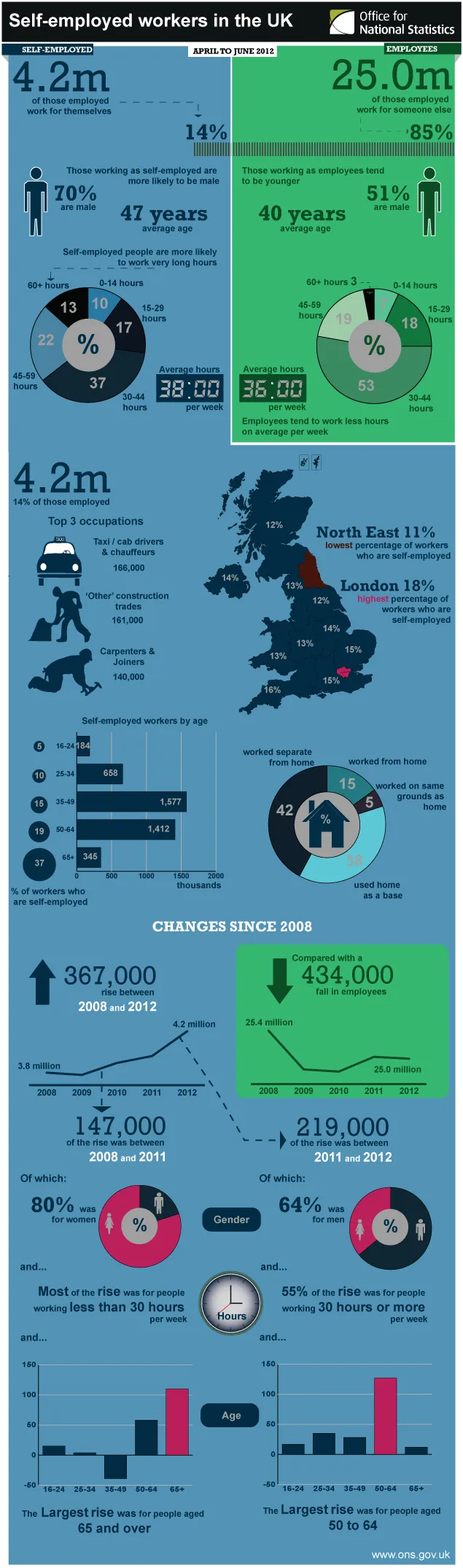
Photo: Office for National Statistics, OGL v1.0, via Wikimedia Commons
Most side-hustle maths goes something like this: money in, expenses out, tax saved for, reserve topped up, maybe a takeaway. Retirement sits somewhere over the horizon, filed under ‘when the hustle is bigger’. That’s understandable. It’s also how a five-figure income can quietly become a five-figure income with no long-term plan attached.
The awkward truth is that nobody is putting money aside for you. There’s no employer matching your contribution, no HR portal nagging you to pick a fund. If you’re self-employed, you are both the employee and the boss. And the boss has been ignoring the pension line on the invoice.
This isn’t a lecture about giving up your Saturday coffee. It’s about treating retirement saving as a pricing and cash-flow decision — one that has to survive the same messy months as the rest of your business.
The cost that never appears on an invoice
When you price a job, you probably include materials, time, maybe software and travel. A pension is a cost too, just a deferred one. Every pound you put into a pension is a pound that isn’t available for this month’s stock order or next month’s quiet patch. That trade-off is real.
But the flip side is that a pension is one of the few places where the tax system chips in. For a basic-rate taxpayer, £80 paid into a personal pension or SIPP typically becomes £100 invested, because the provider claims 20% tax relief. Higher-rate taxpayers can usually claim the extra through Self Assessment; Scottish taxpayers need to check their own rates. Tax relief isn’t a magic money tree, but it does mean the effective cost of saving is lower than the sticker price.
Think of it as a line item you invoice for. If you bill £500 for a job, decide that 3% — £15 — belongs to future you. It sounds tiny. That’s the point. Tiny is sustainable.
What the rules actually mean in plain English
You don’t need a finance degree to start, but you do need the basics.
A SIPP or personal pension is open to self-employed people. You contribute, the provider invests it, and you choose from a fund range. You can usually contribute up to 100% of your relevant UK earnings each tax year and get tax relief on that amount. If your earnings are very low, there’s still a £3,600 gross limit in many cases — worth checking with the provider.
The annual allowance is generally £60,000 for most people in 2026, though tapering rules hit very high earners and there’s a lower allowance if you’ve already flexibly accessed a pension. For most five-figure hustlers, the annual allowance is not the binding constraint. Cash flow is.
One important catch: pension money is locked. You can normally access it from age 55 now, rising to 57 from April 2028. This is not an emergency fund. It is not a tax bill pot. It is not your business reserve. It is money for later, and later can feel very far away when a client pays late.
Start with a number you can defend
A £50 monthly contribution is £600 a year. With basic-rate relief, it’s £750 gross into the pension. If your side hustle profit is £15,000, that’s 4% of profit. Not heroic. But it creates the habit and the account.
A sensible path is to start at 2–5% of profit, then raise it when you raise your rates or clear a big expense. If you’re invoicing regularly, set a standing order for the day after your main client payment lands. Pay the pension before the money gets comfortable in your current account.
Don’t try to max out contributions while you’re still building a reserve. A pension is illiquid; a broken laptop or a quiet January is not. The order that usually makes sense is: tax set aside, essential business and personal reserve, then pension. If you’re carrying credit card debt at 20% APR, clear that first — tax relief is generous, but it doesn’t pay this month’s interest.
The reserve versus pension trade-off
There’s a temptation to see pension saving as the ‘responsible’ option and a business reserve as the cautious one. In reality they do different jobs. The reserve keeps you trading through shocks. The pension keeps you from working forever.
A practical compromise: build a reserve covering three months of essential personal costs plus a small business buffer, then start a modest pension contribution. If the hustle is very new, £25 a month is enough to prove the system works. Increase it after every rate rise or every two new retained clients. The goal is consistency, not a perfect percentage.
Why ‘I’ll start when it’s bigger’ is the expensive delay
Waiting feels prudent. You’re protecting cash flow. But time is the one input you can’t invoice for later. A rough example: £100 a month invested from age 30, growing at 5% a year, could be worth around £128,000 by 67. Start at 40 and the same £100 a month might reach roughly £68,000. That’s not a guarantee — investment returns bounce around — but it shows the cost of delay without any drama.
The delay also makes the first step feel bigger. If you wait until you’re earning five figures a month, £100 looks insulting. Start now and £100 becomes normal. Then £150. Then £250.
A simple November 2026 setup
Open a SIPP or personal pension with a provider that handles relief at source. Pick a cheap global tracker or a default fund you understand — not something you saw on TikTok. Set a £50 standing order for the day after your main invoice usually clears. Tick the pension box on your Self Assessment if you’re a higher-rate taxpayer. Diarise one review a year, maybe in April, to nudge the amount up.
That’s it. No spreadsheet empire. No guilt.
The pension you didn’t invoice for is the one your future self pays for. Put it on the invoice now, even at 3%, and the five-figure hustle starts building something beyond this month’s bank balance. This is general information, not financial advice — if you’re unsure, speak to a regulated adviser.